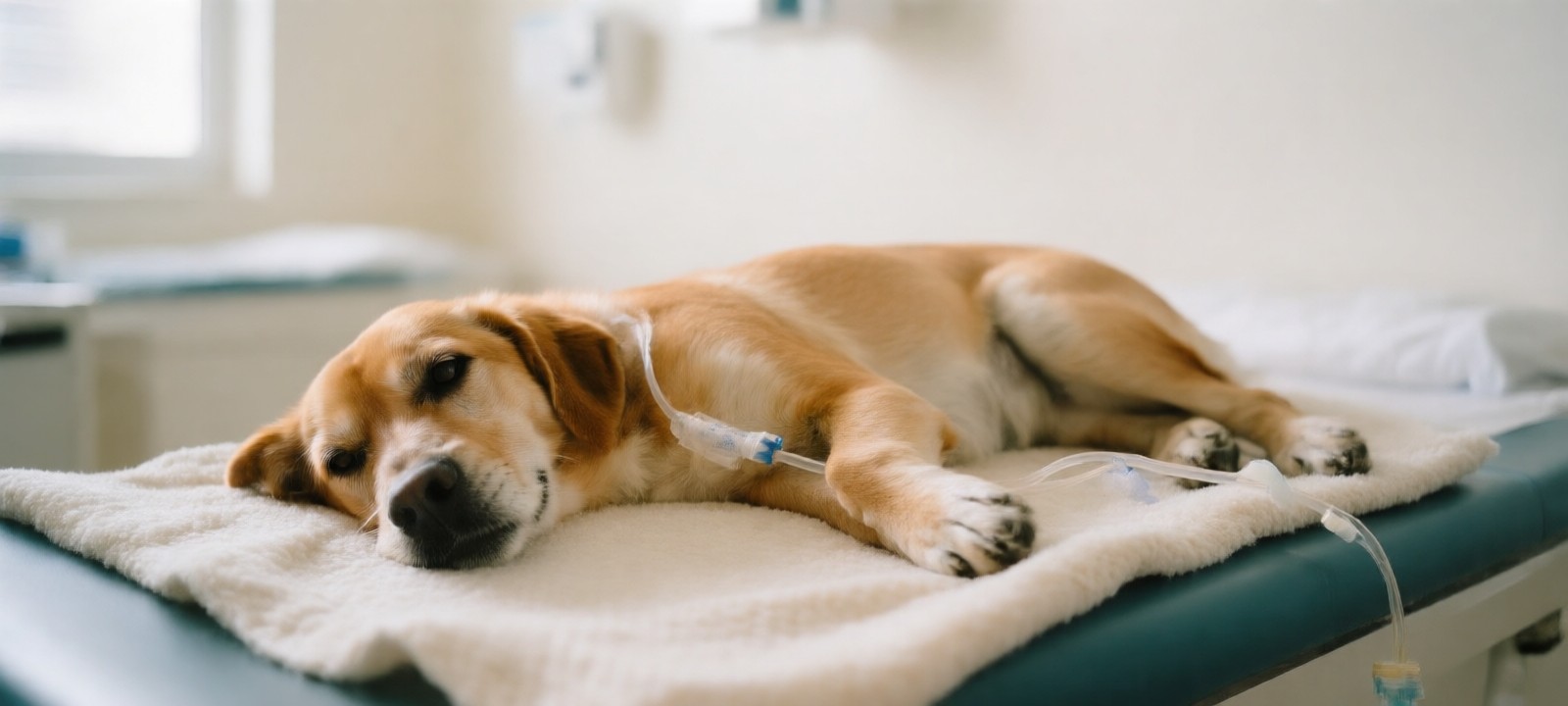
This is the definitive reference for canine parvovirus (CPV) research as of May 2026. It synthesizes 15 parallel research threads and integrates notes from the Obsidian DogHealth-Research vault.
It covers the biology that makes CPV lethal, the treatment protocols that move survival from under 10% to over 90%, the vaccine mismatch driving ongoing failures, the global strain map, the drug-repurposing opportunities that nobody has funded yet, and the researchers and funders who could close those gaps. For actionable next steps, jump to the "How You Can Help" section.
1. Biology and Pathogenesis
1.1 Origin and Emergence
Canine parvovirus (CPV) is one of the most dramatic examples of cross-species viral emergence in veterinary history. It appeared suddenly in 1978 as a mutation from feline panleukopenia virus (FPV), spread to virtually every country on Earth within 18 months, and killed millions of dogs in those first two years. The jump was enabled by just a handful of mutations in the VP2 capsid protein that allowed the virus to bind canine transferrin receptors, something FPV could not do.
Since that 1978 pandemic origin, the virus has continued to evolve. CPV-2 (the original strain) was displaced by CPV-2a in 1979 to 1984, then CPV-2b appeared in 1984, and CPV-2c emerged in Italy around 2000. Each variant has progressively replaced its predecessor. CPV-2c is now the globally dominant strain. The 1978 original is extinct.
1.2 Viral Structure and Genome
CPV is classified in the family Parvoviridae. It is a small, non-enveloped icosahedral virus approximately 25 nm in diameter with a single-stranded DNA genome of approximately 5,200 nucleotides. The compact genome encodes two major proteins:
- NS1 (Non-structural protein 1): The replication helicase and nuclease. Critically, NS1 also actively suppresses host interferon signaling, which allows CPV to replicate without triggering the cell's antiviral defenses. This is why exogenous interferon therapy can be therapeutic even during active infection.
- VP2 (Viral protein 2): The major capsid protein, which makes up the outer shell of the virus. VP2 is the primary target for neutralizing antibodies and is the antigen used in all vaccines. It is also the mutation hotspot where new variants arise. The distinction between CPV-2a, 2b, and 2c is defined by specific amino acid changes in VP2.
1.3 Replication Strategy
CPV uses a rolling-hairpin replication mechanism that has a critical consequence for pathogenesis: the virus cannot independently drive cells into the replication cycle. It depends entirely on cells that are already actively dividing (in S-phase). This explains why CPV causes damage specifically in tissues with the highest cell turnover rates:
- Intestinal crypt epithelium: the rapidly dividing cells that replenish the gut lining every 3 to 5 days. CPV destroys these crypt cells, causing the collapse of intestinal villi and the hemorrhagic enteritis that defines clinical CPV.
- Bone marrow stem cells: destruction here causes the severe neutropenia and lymphopenia that is ultimately what kills most dogs.
- Thymus: especially in neonates.
- Myocardium: in very young puppies (cardiac form, now rare due to widespread maternal antibody levels in breeding populations).
1.4 Why Neutropenia Is the Killer
The conventional understanding of CPV focuses on the diarrhea, but most dogs die from bacterial sepsis, not dehydration. The sequence of events:
- CPV destroys intestinal crypt cells, causing the gut wall to lose its barrier integrity.
- Simultaneously, CPV destroys bone marrow stem cells, causing severe neutropenia (white blood cell counts can fall below 1,000/µL).
- Intestinal bacteria translocate through the damaged gut wall into the bloodstream.
- With no neutrophils available to fight them, these bacteria cause systemic sepsis.
- Sepsis leads to septic shock and death.
This understanding is why antibiotics, despite not affecting CPV itself, are essential treatment components. They're fighting the secondary bacterial invasion, not the virus.
1.5 Epidemiology and Environmental Stability
The incubation period is 5 to 7 days post-exposure. Shedding begins 3 to 4 days after exposure, before clinical signs appear, which is why CPV spreads so efficiently through populations.
CPV is extraordinary in its environmental persistence. It can survive in contaminated soil for 6 to 12 months under favorable conditions, and it resists many common disinfectants. Effective disinfectants are limited: sodium hypochlorite (bleach) at 1:30 dilution, accelerated hydrogen peroxide (Rescue/Accel), and potassium peroxymonosulfate (Trifectant/Virkon). Quaternary ammonium compounds and alcohol-based disinfectants are ineffective and should not be used.
2. Current Treatment Protocols
2.1 Survival Rate Overview
| Treatment Setting | Survival Rate | Notes |
|---|---|---|
| No treatment | Under 10% | Over 90% mortality |
| Supportive care only | 50 to 60% | Fluids alone, no antibiotics |
| IV hospitalization, standard of care | 60 to 90% | Wide range by resource level |
| CSU Outpatient Protocol | 80 to 83% | Low-cost; comparable to inpatient |
| Ecuador Outpatient Protocol | 85.3% | Latin America-validated |
| Interferon Omega (Virbagen Omega) plus supportive care | 85.7% | EU/Mexico approved |
| Trutect CPMA (monoclonal antibody) | Approximately 93% | USDA approved December 2025 |
| Amoxicillin plus gentamicin combination (Portugal study) | 95.5% | 240-dog study; highest of any antibiotic combo studied |
2.2 Inpatient (Hospitalized) Gold Standard
Full hospitalization with IV support represents the most intensive level of care and, in the best-resourced settings, achieves survival rates of 85 to 92%. The essential components:
- Fluid therapy: Aggressive IV crystalloid therapy with Lactated Ringer's solution corrects the severe dehydration and electrolyte imbalances that accumulate rapidly. Dogs may lose 8 to 12% of body weight in fluid within 24 hours.
- Antibiotic therapy: The standard combination is amoxicillin-clavulanate plus metronidazole, or cefazolin plus metronidazole. A notable finding from Portugal (Ornelas Ferreira, 240-dog study) found that amoxicillin combined with gentamicin achieved 95.5% survival.
- Antiemetics: Maropitant (Cerenia) at 1 mg/kg SC or IV once daily is now the standard of care. Ondansetron is used in refractory vomiting cases.
- Nutritional support: Early enteral nutrition via nasogastric tube, if tolerated, significantly reduces intestinal barrier breakdown and shortens recovery time.
- G-CSF (Filgrastim): 5 µg/kg SC every 12 hours can reduce the severity and duration of neutropenia in severely affected dogs.
2.3 CSU Outpatient Protocol (80 to 83% Survival)
The Colorado State University Outpatient Protocol is the most important low-resource CPV treatment advance of the past decade. It achieves 80 to 83% survival without hospitalization using subcutaneous fluids and three medications, all given by injection at a single clinic visit.
| Medication | Dose | Route | Frequency | Duration |
|---|---|---|---|---|
| Lactated Ringer's or Normal Saline | 30 mL/kg | SC | Every 6 to 8 hours | Until eating |
| Maropitant (Cerenia) | 1 mg/kg | SC | Once daily | 3 to 5 days |
| Cefovecin (Convenia) | 8 mg/kg | SC | Once only | 14-day coverage |
| Pyrantel pamoate | 5 mg/kg | Oral | Once | Empiric deworming |
Free resources: Protocol PDF at ufl.pb.unizin.org; Maddie's Fund outpatient program at maddiesfund.org/outpatient-parvo-program.htm
2.4 Ecuador Outpatient Protocol (85.3% Survival)
Guallasamín-Quisilema et al. (2023) published a Latin American validation of once-daily clinic visits over four days using the same fluid/antibiotic/antiemetic support as the CSU protocol, with the addition of biomarker monitoring (C-reactive protein and lactate). Survival was 85.3%. Mortality correlated with hypothermia at presentation and delayed treatment initiation. This is the formalized Latin American low-cost protocol with published regional validation.
2.5 Trutect CPMA: The Game Changer (93% Survival)
Trutect CPMA (Canine Parvovirus Monoclonal Antibody) is the first approved direct antiviral for canine parvovirus, and the first approved antiviral for any parvovirus in any species. It is a caninized recombinant monoclonal antibody directed against the CPV VP2 capsid protein.
- How it works: Binds directly to CPV and neutralizes the virus before it can enter cells, blocking the transferrin receptor interaction. Works even in severely immunosuppressed patients.
- Approval: Conditional USDA approval May 2023; full approval December 2025; prophylactic use indication added June 2025.
- Efficacy: JAVMA 2024 challenge study found 0% mortality in the CPMA group versus 57% in placebo. Real-world data: approximately 93% survival.
- Important caveat (AJVR December 2025): Prophylactic CPMA use may block subsequent vaccine-induced immunization. Dogs receiving CPMA prophylactically should not be vaccinated for at least 4 to 6 weeks.
- Cost and access: Approximately $300 to $500 per dose. Elanco Animal Health has donated $3 million in product and offers a $200 rebate. Pricing for low-resource country access is not yet established.
- Contact: Elanco Animal Health, elanco.com; 1-888-545-5973.
2.6 Interferon Omega: Virbagen Omega (85.7% Survival)
Recombinant feline interferon-omega (rFeIFN-omega), marketed as Virbagen Omega by Virbac. EMA-approved (European Union) and MAFF-approved (Japan). Critically, it is also approved in Mexico (available through Virbac Mexico at vet-mexico.virbac.com).
Dosing (EU label): 2.5 MU/kg IV once daily for 3 consecutive days, administered as early as possible after diagnosis.
Key clinical evidence: De Mari et al. (Veterinary Record, 2003) found a 4.4-fold mortality reduction vs placebo (P=0.0096). Ulas et al. (J Vet Sci, 2023): IFN-omega 85.7% survival vs 71.4% oseltamivir, 71.4% famciclovir, 57.1% control.
Mexican opportunity: Virbagen Omega is already approved in Mexico. The barrier is awareness, access, and cost. A partnership with Virbac Mexico to train vets and reduce per-unit pricing for shelters represents an immediate opportunity.
2026 cytokine complexity finding: Pedroza-Roldán et al. (UdG Guadalajara, 2026) found that in naturally infected CPV-2c dogs, LOW IFN-gamma correlates with survival (counterintuitive), while high IL-6, IL-8, MCP-1, and IL-10 predict poor outcomes. This opens a completely new therapeutic target: anti-IL-6 therapy (analogous to tocilizumab in COVID-19) for CPV cytokine storm management.
2.7 Fecal Microbiota Transplantation (FMT)
Primary evidence (Pereira et al., Brazil 2018 RCT, 66 puppies): diarrhea resolved within 48 hours in 61.5% of FMT group vs 4.8% of control (P<0.001); hospitalization duration: 3 days (FMT) vs 6 days (control). An 18-institution consortium (Winston et al., Ohio State) is testing a more intensive regimen, with results pending as of May 2026.
2.8 Hyperimmune Plasma and Serum
Fresh or frozen plasma from recovered dogs transfers anti-CPV antibodies immediately. ACTINMUN (Atlixco, Puebla, Mexico) is a Mexican-made, freeze-dried canine hyperimmune serum covering both CPV and canine distemper. Dosing: 4 to 7 ml/kg IV/SC/IM. Phone: (+52) 244-110-5694; website: actinmun.com. Evidence note: As of 2026, ACTINMUN has no published peer-reviewed efficacy trials in indexed journals. The ICA Colombia (2024) registry lists it under veterinary biologicals but without controlled trial data. It should not be considered a first-line treatment until clinical evidence is published. General hyperimmune serum (from any recovered donor dog) has documented efficacy; ACTINMUN's specific claims have not been independently validated.
Critical timing note (Benha University, Egypt): Hyperimmune serum is highly effective when given within 3 days of symptom onset. Efficacy drops to 66% at day 4 and is non-protective if given at day 5 or later.
2.9 Nitazoxanide: The Most Promising Untested Drug
In vitro screening (PMC 2019): Nitazoxanide (NTZ) had the highest inhibitory activity of 1,430 FDA-approved drugs screened against CPV. EC50: 2.71 µM; inhibition: 106.59%; high selectivity index. Mechanism confirmed (PMC 2024): G2/M cell cycle arrest; JAK-STAT pathway activation; direct downregulation of CPV NS1 and VP2 expression.
Why no clinical trial exists: NTZ is off-patent with no commercial incentive for a pharmaceutical company to fund a canine trial. A pharmacokinetic/dose study in healthy dogs would cost $50,000 to $150,000. A pilot clinical trial would cost an additional $100,000 to $200,000. This is the single most cost-effective CPV research investment available.
Research gap, critical context: NTZ has established canine safety data going back to 1985. The original preclinical toxicology package (Murphy and Friedmann, Journal of Applied Toxicology, 1985) explicitly included dogs and cats: single oral doses up to 10 g/kg were tolerated without lethal toxicity, an unusually clean safety profile for a drug candidate. Dogs are not a species that needs safety validation for NTZ; that work was done forty years ago. What has never been done: any in vivo efficacy study in dogs for a viral indication, and any study against CPV specifically. The confirmed mechanism, the forty-year-old canine safety data, and a $50,000 to $150,000 pharmacokinetic study are all that stand between "strongest in vitro signal of 1,430 drugs" and a clinical trial. This is a tractable gap.
3. Vaccine Landscape
3.1 The CPV-2c Mismatch Problem
All commercial DHPP combination vaccines use CPV-2 or CPV-2a antigen strains, replaced by CPV-2c as the dominant circulating variant. The clinical consequence is a vaccine failure rate of approximately 34% in CPV-2c-dominant regions. This is particularly relevant to Mexico: Jalisco has been found to be 100% CPV-2c over a five-year period (2014-2019), with no CPV-2a or 2b detected, a globally unique finding.
A 2023-2024 quality control study of 71 commercial vaccine vials in Brazil found that 9 (12.7%) had zero detectable CPV-2 DNA, indicating manufacturing failures.
| Age | Vaccine | Notes |
|---|---|---|
| 6 to 8 weeks | DHPP MLV | Often fails due to maternal antibody interference |
| 9 to 11 weeks | DHPP MLV | Booster |
| 12 to 14 weeks | DHPP MLV | Booster |
| 16+ weeks | DHPP MLV | Final puppy booster; maternal antibodies now gone |
| 1 year | DHPP booster | |
| Every 3 years | DHPP | Adult core vaccine |
3.2 The Maternal Antibody Interference Problem
The "immunity gap" (when maternal-derived antibodies are too low to protect but too high to allow vaccination to succeed, approximately 6 to 16 weeks) is the window of maximum vulnerability. Street dog puppies exposed to CPV at 6 to 10 weeks, exactly during this window, have no protection. In Mexico, owners may be trying to vaccinate at 6 to 8 weeks, but the maternal antibody interference causes the vaccination to fail silently.
3.3 Nobivac DP PLUS: The Breakthrough Vaccine
Nobivac DP PLUS (MSD Animal Health / Merck) uses a recombinant CPV-2c strain 630a as its antigen. The published challenge study (Tarpey et al., PMC 2023) found:
- All 11 vaccinated puppies with high maternal antibody titers developed robust active immunity (100% in the highest-risk group where conventional vaccines fail).
- Earliest age of protection: 4 weeks post-vaccination.
- Onset of immunity: 3 days post-vaccination, extremely rapid.
3.4 Next-Generation Vaccines in Development
- VLP vaccines: VP2 protein self-assembles into empty capsids without viral DNA. Antibody titers of 1:6144 in guinea pig models. Status: pre-clinical.
- mRNA-LNP vaccines: The platform is proven in veterinary medicine (Merck launched a canine influenza mRNA vaccine in 2024), but no CPV mRNA vaccine exists. Potential advantages: rapid strain updates, better maternal antibody interference management, potentially thermostable. Estimated cost for proof-of-concept: $500,000 to $2,000,000.
4. Global Strain Distribution
4.1 The CPV-2c Takeover
CPV-2c emerged in Italy around 2000 and is now dominant in the United States, most of Europe, Brazil, Argentina, Mexico (Jalisco is 100%), Japan, China, South Korea, and Thailand. The global dominance of a strain that existing vaccines were not designed for is the single most important driver of ongoing vaccine failures.
4.2 Jalisco, Mexico (100% CPV-2c)
Pedroza-Roldán et al. (Universidad de Guadalajara) genotyped CPV isolates from the Guadalajara metropolitan area over five years (2014-2019) and found 100% CPV-2c, no other strain detected. This is globally unique. The 2024 complete genome sequences identified three mutations characteristic of Mexican strains: T226S (universal across all Mexican isolates), F267Y (an Asian-lineage mutation appearing in Jalisco, suggesting hybrid evolutionary dynamics), and A440T. These are the first complete CPV genome sequences published from Mexico.
4.3 Regional Anomalies
- Colombia (Antioquia): 93.1% CPV-2a, no CPV-2c detected, with a novel Ala514Ser sub-variant.
- Western Rio Grande do Sul, Brazil: A new CPV-2a variant with the Ser297Ala mutation, first reported globally.
- Northern Brazil (Belém, Pará): CPV-2b with a novel Tyr324Leu VP2 mutation, first reported globally.
- Kazakhstan (2025 outbreak): Canine circovirus (42.3% of samples) co-circulating alongside CPV; co-infection dramatically increases case fatality.
5. Human Antiviral Parallels and Drug Repurposing
| Human Drug Class | CPV Mechanism | Status | Priority |
|---|---|---|---|
| Monoclonal antibodies | Applied, Trutect CPMA | USDA Approved 2025 | Done |
| Interferon therapy | Applied, Virbagen Omega | EU/Mexico approved | US access gap |
| Nitazoxanide | Highest in vitro activity (1,430 drug screen) | In vitro only, no clinical trial | HIGHEST |
| Brincidofovir | Mechanistic parallel with human parvovirus B19 | In vitro B19 only, no CPV study | HIGH |
| mRNA vaccine platform | Proven in veterinary medicine for canine influenza | Not applied to CPV | HIGH |
| Anti-IL-6 (tocilizumab analog) | CPV-2c cytokine storm (2026 Guadalajara finding) | Concept only, no CPV study | HIGH |
| IgY egg-yolk antibodies | Oral antibody delivery; 100% recovery in India study | Pre-clinical; scalable | Medium |
5.1 The Brincidofovir Case
CPV and human parvovirus B19 share rolling-hairpin replication dependent on host DNA polymerase delta. Brincidofovir is a lipid-conjugated cidofovir that inhibits DNA polymerase delta activity with confirmed in vitro activity against human parvovirus B19 (EC50: 0.22 to 0.63 µM). Zero CPV studies exist in vitro or in vivo. An in vitro study using F81 feline kidney cells would cost approximately $10,000 to $30,000.
5.2 The Cytokine Storm Target
The 2026 Pedroza-Roldán finding that high IL-6, IL-8, MCP-1, and IL-10 predict poor outcomes in CPV-2c infection opens anti-IL-6 therapy as an entirely new therapeutic target. Analogous to tocilizumab in COVID-19 management. No study has tested anti-IL-6 therapy in CPV.
6. Research Gaps and Priorities
- Nitazoxanide Clinical Trial (Actionable Now): In vitro data is strong, mechanism is confirmed, safety profile is known, drug is oral and generic. PK study: $50,000 to $150,000. Pilot clinical trial: $100,000 to $200,000. Best champion: Dr. Lauren Sullivan at CSU ([email protected]) or Dr. Colin Parrish at Cornell ([email protected]).
- Trutect CPMA Access in Developing Countries: $300 to $500/dose locks out Mexico, Latin America, Africa. Path: Elanco tiered pricing program modeled on HIV antiretroviral global access frameworks.
- Anti-IL-6 Therapy for CPV Cytokine Storm: Scientifically compelling, no study exists. Pilot trial in severe CPV cases with high IL-6 would be feasible at a major veterinary school.
- mRNA CPV Vaccine: Platform exists. Regulatory pathway exists. Antigen sequences are known. Needs research team, manufacturing partner, and $500,000 to $2,000,000.
- FMT Microbiome Characterization: 16S rRNA plus metagenomic analysis to identify active strains. Cost: $30,000 to $80,000. Could enable a commercial probiotic deployable in Mexico and Latin America.
- US Approval Pathway for Virbagen Omega: MUMS Act conditional approval at FDA-CVM based on existing EU evidence. Cost: approximately $200,000 to $500,000 in regulatory preparation.
- Outpatient vs. Inpatient RCT in Mexico: No large randomized trial has compared outpatient vs. inpatient care in a Latin American context. UdG team is positioned to lead. Cost: $200,000 to $500,000.
- Brincidofovir in vitro CPV Study: Cost: $10,000 to $30,000. Lowest-cost, highest-mechanism-confidence experiment available.
- Nobivac DP PLUS Deployment in Street Dog Populations: Science is done; needs NGO partnership. Estimated pilot cost: $50,000 to $200,000.
- CPV Surveillance Network for Latin America: No genotyping data exists for most of Mexico, Central America. Cost: $200,000 to $500,000/year to operate.
7. Key Researchers and Institutions
Mexico (Primary Relevance)
USA (Key Institutions)
Funding Organizations
| Funder | Focus | Max Grant | Contact |
|---|---|---|---|
| AKC Canine Health Foundation | Any canine health | $50K to $250K | [email protected] |
| Morris Animal Foundation | Veterinary research broadly | $100K to $400K | [email protected] |
| Maddie's Fund | Shelter medicine, CPV programs | $50K to $500K | maddiesfund.org |
| USDA NIFA | Agricultural/veterinary science | $50K to $1M | nifa.usda.gov |
| Petco Foundation | Shelter and community dogs | Variable | petco.org/foundation |
| NIH R21 (NIAID) | Basic science | $275K | grants.nih.gov |
Industry Contacts
| Company | Product | Contact |
|---|---|---|
| Elanco Animal Health | Trutect CPMA | elanco.com; 1-888-545-5973 |
| Virbac Mexico | Virbagen Omega | vet-mexico.virbac.com |
| MSD Animal Health | Nobivac DP PLUS | merck-animal-health.com |
| ACTINMUN | Hyperimmune serum (Mexico) | actinmun.com; (+52) 244-110-5694 |
8. How You Can Help
Immediate Actions (This Week)
- Push for Trutect CPMA Compassionate Pricing for Latin AmericaModel the advocacy on the HIV antiretroviral global access campaigns of the early 2000s. The mortality difference (7% vs 30%) at $300 to $500 per dose is a straightforward argument for urgent access. Advocacy target: Elanco CEO and global access team.
- Email César Pedroza-RoldánContact him as an advocate for the cause. His lab is working on the specific CPV-2c strains circulating in Jalisco. Ask: What research is currently underfunded? What would a $50,000 gift enable? What is the biggest gap he would address if money were not an obstacle? [email protected]
- Contact Virbac Mexico about Virbagen OmegaVirbagen Omega is already approved in Mexico. Investigate pricing for shelter use and whether a bulk pricing arrangement is possible for local clinics and shelters in the region. vet-mexico.virbac.com
- Contact Elanco about Trutect CPMA for MexicoAsk about Elanco's NGO partnership programs and whether Trutect CPMA is available in Mexico or can be accessed through their shelter donation program. elanco.com; 1-888-545-5973
Medium-Term Actions (Next 1 to 6 Months)
- Donate to Morris Animal Foundation CPV Research FundDirect donation to a specific CPV research project, or contact their grants team about directing funds toward nitazoxanide or mRNA vaccine research. [email protected]
- Fund the Nitazoxanide PK StudyContact the AKC Canine Health Foundation about a directed grant to Colorado State University or Cornell for a pharmacokinetic study of nitazoxanide in dogs. This is the single most cost-effective CPV research investment available: $50,000 to $150,000. [email protected]
- Connect César Pedroza-Roldán with Morris Animal FoundationThe UdG CUCBA team has the clinical population, the institutional infrastructure, and the research track record to run a major CPV trial. Morris Animal Foundation is the natural funder. Introduce them.
High-Impact Longer-Term (6 Months to Multi-Year)
- Fund a Randomized Outpatient vs. Inpatient CPV Trial in MexicoThe most impactful single study that could change care for millions of dogs in low-resource settings globally. The UdG Guadalajara team is positioned to lead it. Estimated cost: $200,000 to $500,000. This would generate a landmark paper that changes global clinical guidelines.
- Establish a CPV Research Fund at Universidad de GuadalajaraAn endowed research fund at UdG CUCBA with annual grants of $10,000 to $50,000 per year would sustain CPV research in Jalisco indefinitely and train the next generation of veterinary virologists working on this problem.
- Support the mRNA CPV Vaccine Research ProgramContact Morris Animal Foundation and MSD Animal Health about co-funding a proof-of-concept mRNA CPV vaccine study. $500,000 to $2,000,000 investment; if successful, would eliminate CPV-related deaths globally within a decade.
- Advocate for Virbagen Omega FDA-CVM ApprovalMUMS Act conditional approval is available for drugs proven in other major jurisdictions. Virbagen Omega qualifies. Advocacy targets: FDA-CVM, AVMA policy committee, Virbac US. This unlocks the EU's proven antiviral for US dogs.
- Expand Mexico's Rabies Vaccination Infrastructure to Include DHPPMexico achieved a greater than 95% reduction in canine rabies deaths between 1990 and 2010 through annual mass vaccination days. This infrastructure already exists. The marginal cost of adding the DHPP combination vaccine, which prevents both parvovirus and distemper in a single shot, to existing rabies campaigns is small. This is a policy advocacy target that could transform CPV prevention at national scale.
9. Key Papers Reference List
| Citation | Key Finding | URL/PMID |
|---|---|---|
| Lim et al., JAVMA 2024 | 0% CPMA mortality vs 57% placebo; basis for Trutect approval | Link |
| Ulas et al., J Vet Sci 2023 | IFN-omega 85.7% survival (best of 4-arm trial) | PMC Link |
| Tarpey et al., PMC 2023 | Nobivac DP PLUS: 100% MDA puppies immunized; protection from 4 weeks | PMC Link |
| PMC 2019 Drug Screen | Nitazoxanide: highest CPV inhibition of 1,430 drugs | PMC Link |
| PMC 2024 NTZ Mechanism | G2/M arrest, JAK-STAT activation confirmed as NTZ CPV mechanisms | PMC Link |
| Pereira et al., 2018 Brazil FMT RCT | Diarrhea resolved 48h in 61.5% FMT vs 4.8% control | PMC Link |
| De Mari et al., Vet Record 2003 | IFN-omega: 4.4-fold mortality reduction vs placebo | PMID 12572939 |
| Martin et al., JVIM 2002 | 0/5 placebo survived; 4/5 IFN-omega survived | PMID 12243889 |
| Pedroza-Roldán et al., 2014 | CPV-2b/2c in western Mexico; 97.8% cases unvaccinated; 37.8% puppy mortality | PMID 25525144 |
| Pedroza-Roldán et al., 2024 | First complete CPV-2c genomes from Mexico; T226S, F267Y, A440T mutations | Not yet indexed |
| Venn et al. (POPS Trial), JVECC 2017 | No significant survival difference: 90% inpatient vs 80% outpatient | PMID 27918639 |
| Horecka et al., Animals 2020 | 86.6% survival across 5,127 dogs/11.5 years; 96.7% survival after day 5 | |
| Goddard and Leisewitz, Vet Clin 2010 | Definitive clinical CPV review; 176+ Scopus citations | Link |
| Frontiers 2025 (Kazakhstan co-infection) | Canine circovirus co-infection with CPV: dramatically increases mortality | Link |
| PMC 2025 CPV Advances Review | Comprehensive review of CPV-2c, vaccine gaps, treatment landscape | PMC Link |
Document compiled May 2026, DogHealth Project. Annette Thompson, Jalisco, México. This synthesizes 15 parallel research threads and notes from the Obsidian DogHealth-Research vault.