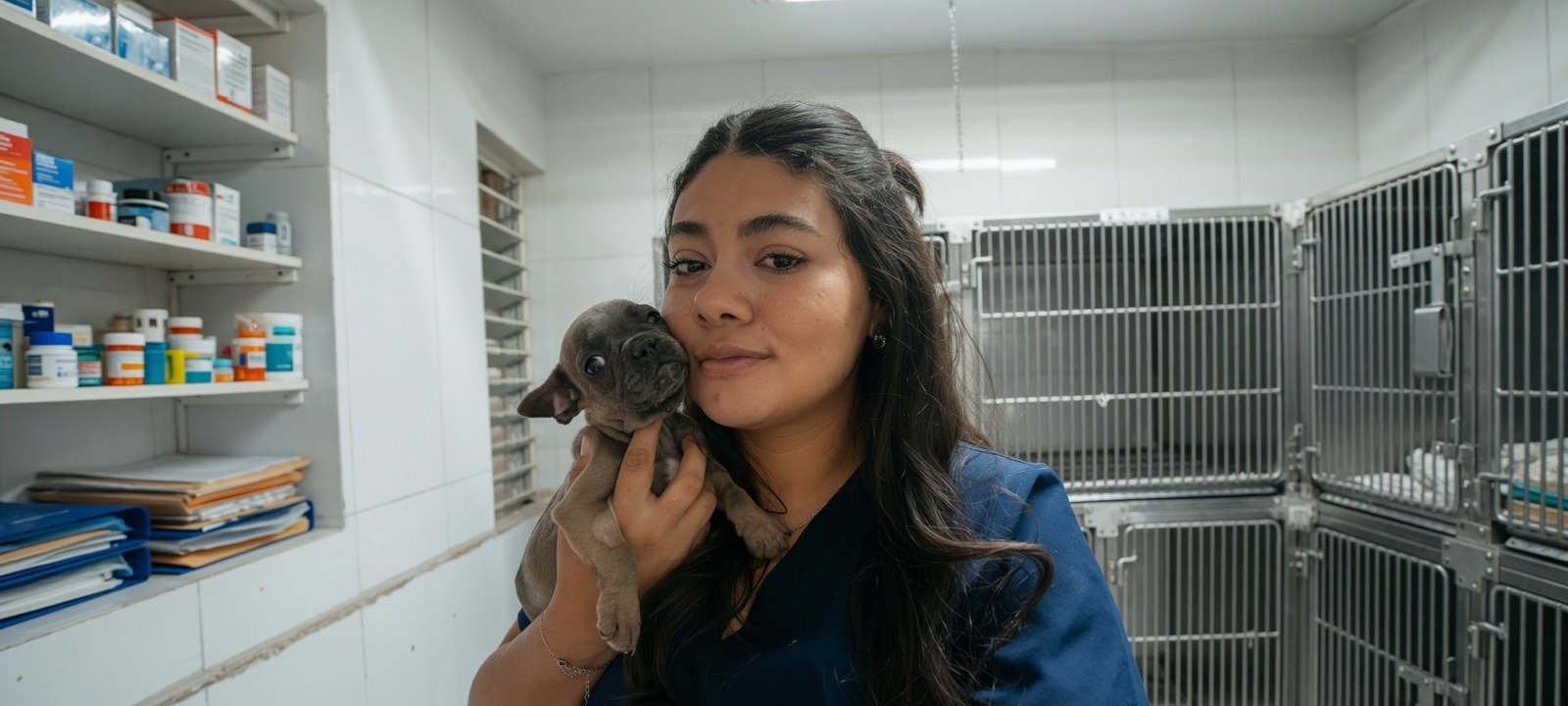
You already know how distemper presents in the exam room. You've seen the biphasic fever, the mucopurulent oculonasal discharge, the cough, the diarrhea, the footpad hyperkeratosis. You know the profound immunosuppression that opens the door to secondary bacterial infection, and you know that once neurological signs appear, the prognosis darkens.
What you may not know is that the distemper therapeutic frontier has moved in two directions at once. On one side, an antiviral that already cures a fatal feline disease turned out to be the most potent compound against the distemper virus in the most rigorous published screen, and it's obtainable in Mexico today. On the other, there's a Mexican randomized clinical trial of silver nanoparticles whose results are as striking as they are controversial. And for the dog that survives with myoclonus, the most recent literature changes the order of the drugs worth trying first.
This is a clinical update, not a basic science review. It covers what has changed, what is available in Mexico, what it actually costs, and where the evidence really stands. And it honestly separates what you can prescribe today from what is barely at the experimental frontier.
The Uncomfortable Starting Point: There Is No Approved Antiviral Against Distemper Anywhere in the World
It's worth naming plainly, because it defines everything else.
There's no approved antiviral against the canine distemper virus in any country. This was confirmed both by the 2024 ASPCA clinical guidance and by the 2025 University of California, Davis antiviral screen. The standard of care, today, is intensive supportive care, and well executed it saves real lives.
This has a consequence you already know firsthand: the balance tips decisively toward prevention and toward early viral control. Once the virus seeds the central nervous system, the disease changes character. The neurological phase rarely resolves and is frequently progressive, according to the ASPCA's own guidance. That's why the right mental frame for distemper is: prevent before you treat, and treat early before the virus reaches the brain.
The Vaccine Is Still the Only True Cure, and It Works by Prevention
Nothing that happens after infection is as effective as a correctly vaccinated puppy. That's the most honest sentence in this entire document.
The distemper vaccine, whether modified live virus or the recombinant vectored vaccine (which expresses the virus's H and F proteins), is highly effective and induces prolonged immunity. The problem in your region isn't vaccine quality but coverage: the unvaccinated puppy, or the incompletely vaccinated one, is the one who fills your waiting room with systemic signs a few weeks after environmental exposure.
The window of vulnerability is the same one you manage with parvovirus: the period when maternal antibodies have declined enough to leave the puppy exposed, but can still interfere with a vaccine dose. The complete puppy series, with boosters that cover that window, is the highest-impact intervention that exists for this disease. Pushing early and complete vaccination, particularly in litters from high-exposure environments and in community dogs, moves the needle on regional mortality more than any antiviral on this page.
Intensive Supportive Care Isn't an Adjunct: It Is the Treatment
Because there's no specific antiviral, supportive care doesn't accompany the treatment. It is the treatment, and it's the strongest determinant of whether a particular dog lives or dies. The evidence is clinical-guidance consensus (ASPCA, 2024). It's available today, in any clinic.
Fluid therapy. The distemper patient dehydrates from vomiting, diarrhea, anorexia, and febrile losses. Correct the deficit and maintain hydration with intravenous crystalloids in the hospitalized patient, or with subcutaneous fluids in the outpatient or low-resource setting where maintaining an IV line isn't feasible. Monitor and correct the electrolyte disturbances typical of gastrointestinal losses.
Antiemetics and gastrointestinal support. Control vomiting to protect hydration and allow enteral nutrition. Maropitant (maropitant citrate) and ondansetron are the workhorses; gastroprotectants are reasonable if there's gastritis or hematemesis. The goal is to break the cycle of vomiting, dehydration, and anorexia early.
Broad-spectrum antibiotics for secondary bacterial infection. This isn't optional in most clinical cases. Distemper is profoundly immunosuppressive (it attacks lymphoid tissue via the SLAM and nectin-4 receptor axis), and that immunosuppression opens the door to the secondary bacterial disease that frequently does the lethal work. Doxycycline is the first-line agent for respiratory disease from Bordetella and Mycoplasma; escalate to parenteral antibiotics, with or without a fluoroquinolone, for bronchopneumonia. The antibiotic treats the bacteria, not the virus, but in distemper that distinction can be the difference between recovery and death.
Respiratory, nutritional, and ocular support. For lower-airway disease and pneumonia, add oxygen, nebulization, and coupage as the case warrants. For anorexia, nutritional support and assisted feeding. Conjunctivitis and keratoconjunctivitis sicca are common: artificial tears and topical care protect the cornea. And if seizures appear, control them with standard anticonvulsants, with the honest prognostic caveat of the next section.
GS-441524: The Antiviral That Cures Feline FIP and Is the Most Potent Compound Against Distemper in the Lab
If there's a single name worth knowing on the distemper frontier, this is it.
GS-441524 is a nucleoside analog that, once converted to its active triphosphate, interferes with the virus's RNA-dependent RNA polymerase. In the most recent and rigorous antiviral screen (Oliver-Guimerá, Murphy, and Keel, 2025, published in Viruses), GS-441524 was the most effective of six antivirals tested against three wild lineages of the distemper virus, blocking viral replication at pharmacologically relevant concentrations (EC50 of approximately 2.7 to 3.95 micromolar). Remdesivir (its own prodrug), nirmatrelvir, EIDD-2801, and EIDD-1931 were also active, to a lesser degree.
Two things set it apart beyond potency. It has good oral bioavailability and an excellent safety margin in dogs, tolerated orally up to very high doses. And it's already in widespread real-world use through the global feline infectious peritonitis (FIP) treatment network, where it has effectively cured that disease. That means it's genuinely obtainable, in Mexico included, through the FIP treatment channels, in a way that no other compound on this list is.
The honest nuance: the data against distemper are in vitro for now (across multiple lineages, yes, but still cell culture), backed by solid in vivo safety data drawn from FIP use in cats and dogs. There's no published canine clinical trial against distemper. So you have a potent compound against the virus in a Petri dish, demonstrably safe in dogs, and physically obtainable, but not proven against distemper in a living patient.
Key research gap: the next step is obvious, fundable, and potentially field-changing. A real canine clinical trial of GS-441524 for acute distemper, ideally administered early, before neurological signs appear, on the hypothesis that early viral control may prevent the CNS phase, an outcome no study has yet measured. A region with a high distemper caseload is exactly where that trial should be done. If you decide to consider it today on a compassionate basis, it must be with the owner's informed consent and an explicit "experimental and off-label" framing, reserved for the early case and honestly discussed against the alternative, which is frequently euthanasia.
Therapeutic Costs in Mexico and the SENASICA Import Pathway
Prices as of May 2026; exchange rate MXN 17.50/USD.
Virbagen Omega (interferon-omega, Virbac), registered in Mexico, available from veterinary distributors:
- ~MXN 3,075 per 10 MU vial (MVZ/vet price, Alevigo distributor)
- ~MXN 3,844 per 10 MU vial (public price)
- Cold chain required
Cerenia (maropitant citrate, Zoetis) 20 mL injectable, SAGARPA registration Q-1196-702:
- ~MXN 1,148 per 20 mL vial
- Controlled product: sold only to authorized veterinarians (VRA)
GS-441524, NOT registered in Mexico; no approved veterinary label for dogs:
- Available gray-market through FIP supply channels (e.g. CuraPIF LATAM), priced in USD
- ~MXN 880–1,025 per vial (15–20 mg/mL, converted at MXN 17.50/USD)
- Off-label, unregistered, no standardized dosing protocol for canine distemper
- Per-course cost is not determinable; do not present a total course figure
SENASICA import pathway for biologics and unregistered antivirals
Veterinarians in Jalisco wishing to import Virbagen Omega, GS-441524, or other animal-health biologics must follow the official Mexican zoosanitary import process:
- Register with SAT in the Padrón de Importadores (required to access VUCEM)
- Consult the MCRZI (Módulo de Consulta de Requisitos Zoosanitarios de Importación) on the SENASICA site to identify the exact document requirements for your specific product
- File a solicitud in VUCEM for the Certificado Zoosanitario para Importación
- OISA inspection at the port of entry (Oficina de Inspección de Sanidad Agropecuaria)
- Certificate issued to clear the goods
Certificate fee: approximately MXN 2,407 per certificado (DOF/SENASICA fee schedule, 2026).
Note: "registering a veterinary product for sale in Mexico" (the full SENASICA product registration, approximately 60 business days, 5-year validity, yields the SAGARPA registration number) is a separate, longer process from a one-time import certificate. Most clinics use the one-time certificate pathway for individual patient needs.
Cold chain: Virbagen Omega and GS-441524 require unbroken refrigeration; OISA inspection verifies cold-chain documentation at port of entry.
Silver Nanoparticles: The Mexican Trial of 207 Dogs, Read With Both Hope and Caution
This is the most provocative clinical result, and the most relevant to you, precisely because it's Mexican research.
Gastelum-Leyva and colleagues (2022, Viruses) carried out in Baja California a randomized clinical trial of 207 dogs naturally infected with distemper. They added a 3% silver nanoparticle formulation (conjugated with PVP and hydrolyzed collagen), given orally and nasally, to supportive therapy, and compared it with supportive care alone. The study is reported as randomized, ARRIVE-compliant, with ethical approval and owner consent.
The reported results are striking. In the non-neurological form, survival was 84.6% (44/52) with silver nanoparticles versus 15.2% (7/46) in the controls. In the neurological form, it was 65.6% (38/58) versus 0% (0/51) in the controls. No adverse reactions were detected, and the authors report a higher proportion of recovery without sequelae.
The skeptical reading, which is mandatory here: this is a single, single-center trial, published in an MDPI journal (legitimate and peer-reviewed, but of variable reputation). The neurological control arm with 0% survival (0 of 51) is an extraordinarily poor outcome that magnifies the contrast and could reflect an especially severe case selection. The long-term safety of silver (tissue accumulation, argyria) is a general concern that a short trial doesn't resolve. It's a genuinely interesting and locally relevant result, but it requires independent replication before it can be called proven.
Key research gap: independent replication of this trial, ideally multicenter and blinded, is one of the three strongest research bets in the entire distemper field. And since it's Mexican research on a patient population identical to yours, Jalisco veterinarians are in a privileged position to take part in that replication or to push for it.
The Experimental Frontier: What to Watch But Not Yet Prescribe
Beyond GS-441524 and silver nanoparticles, there's a group of approaches that belong to the research pipeline, not the prescription pad. Knowing them positions you to judge whatever arrives in the coming years.
ERDRP-0519 is the milestone that proved the concept in a living animal: an oral, morbillivirus-specific polymerase inhibitor that protected infected ferrets from a lethal distemper (Krumm et al., 2014, Science Translational Medicine). It remains a research compound, not for sale, but it proved that a small-molecule antiviral can work in vivo against this viral family.
Porcine anti-distemper antibodies (xenogeneic) are one of the most interesting passive-immunization signals: in a study in puppies, they improved survival in puppies with non-neurological signs, with minimal adverse effects (Liu et al., 2016). It matters because the benefit was seen in the population that dies most and where the owner most often faces the decision between treating and euthanasia. It's not a shelf product, but it's a real, replicable approach that a determined regional or institutional effort could build.
Recombinant feline omega interferon (Virbagen Omega, Virbac) is one of the few items in this document you can obtain through normal channels in Mexico, where it's registered. It's used off-label in several viral diseases. The nuance falls squarely on efficacy: we've found no published trial testing it against distemper, so read its effectiveness here as unproven rather than disproven. It's reasonable to consider it as an adjunct in a region where it's on the shelf, provided you and the owner understand that specific proof against distemper doesn't exist.
Favipiravir (T-705) and ribavirin inhibit the distemper virus in cell culture, but ribavirin is too cytotoxic to be useful on its own, and the 2025 UC Davis screen saw no protective effect from either in its model. The evidence is conflicting and weak. Several natural products of Latin American origin (Mexican fucoidan and propolis, Brazilian 6-methylmercaptopurine riboside) show notable in vitro selectivity, but without any in vivo data. They're leads for researchers, not prescriptions for patients.
The Other Front: The Survivor's Myoclonus, and Why It Almost Never Yields
Here most clinicians don't need new information about how hard it is. They need a clear hierarchy of what to try first, and why.
Distemper myoclonus is, in the words of Tipold, Vandevelde, and Jaggy (1992), "almost pathognomonic of this disease, although it occurs in fewer than half of cases." It's a rhythmic, involuntary jerk of a muscle or muscle group, classically 1 to 3 Hz, that characteristically persists during sleep, a trait that distinguishes it from nearly all other movement disorders of cerebral origin. De Aguiar and colleagues (2012) found it in 73.6% of dogs with neurological involvement.
The reason it resists treatment is mechanistic. The primary mechanism is a self-sustaining spinal or segmental "pacemaker": local spinal motor circuits become disinhibited and fire autonomously, with such persistence that the jerk continues even during sleep. This corresponds to human segmental spinal or propriospinal myoclonus, and it explains why centrally acting anticonvulsants fail so often: they act higher up in the brain than the generator of the problem. Underlying it is a chronic demyelinating infection driven by viral persistence (non-cytolytic cell-to-cell spread), oxidative stress, and neurotoxic astrocytes, with minimal natural remyelination.
The honest treatability verdict: established distemper myoclonus is something we can today sometimes soften and rarely abolish. It's manageable for comfort and function, not curable. The largest prospective canine study (Sarchahi, Arbabi, and Mohebalian, 2025) enrolled 35 dogs with neurological signs, of which 25 tested distemper-positive. On phenobarbital plus prednisolone, just 2 of those 25 dogs (8%) mostly recovered, and the authors explicitly noted the limited effectiveness "particularly for myoclonus," with no demonstrated benefit from corticosteroids. That 8% is the recovery rate on one specific drug pair in one small cohort, not the natural history of distemper myoclonus.
The symptomatic ladder you can use today, in order:
- Levetiracetam is the best rational first choice, and it's worth being precise about what that rests on: no published study has tested levetiracetam in post-distemper myoclonus. The reasoning is extrapolated from its first-line role in human cortical myoclonus and from a five-dog canine series in suspected myoclonic seizures, which is a different problem from distemper myoclonus (that series reported 32.5 mg/kg orally every 12 hours). Well tolerated, with mild sedation or ataxia and behavioral change in roughly 25 to 50%. It's the easiest to obtain and the one with the best rational basis, but treat it as a reasonable extrapolation rather than an evidence-backed finding. The doses cited are reference points from the literature, not a prescribing protocol.
- Clonazepam is the second choice, mechanistically the most appropriate: it's the human first-line drug for segmental and propriospinal myoclonus, which is exactly the pattern distemper most resembles. Complete suppression is uncommon, so accept a partial response.
- Phenobarbital should be added only if true seizures coexist, not for isolated myoclonus. Gabapentin or pregabalin serve for the neuropathic or discomfort component. These are adjuncts with anecdotal support.
- Botulinum toxin (BoNT-A, ideally electromyography-guided) is the standout frontier option for a single, disabling focal jerk (a limb, the face, the masticatory muscles). The translatable human evidence is solid (in segmental spinal myoclonus "botulinum toxin is the best treatment"), although there's no published canine distemper series yet, so it's a specialist, off-label move, with transient benefit that requires reinjection.
- Acupuncture and electroacupuncture have a real clinical study: dos Santos and colleagues (2022, n=24) reported improvement in neurological function with acupuncture plus weekly electroacupuncture over 24 weeks in dogs with neurological sequelae of distemper. It isn't controlled for natural recovery, but it's a genuine, low-risk prospective dataset.
Always confirm distemper first (RT-PCR in blood or CSF, antigen test) and characterize the movement as focal or multifocal, ruling out seizures, which respond differently. And frame the owner's expectation toward reduction and comfort, not abolition. Avoid promising a cure. Myoclonus is usually lifelong, although it occasionally remits on its own, which is exactly why uncontrolled claims that "it worked" should be read with skepticism.
Mesenchymal Stem Cells: The Only Reported Treatment That Has Moved Established Myoclonus
Of the entire frontier, the most promising disease modifier for the sequelae themselves is mesenchymal stem cell (MSC) therapy. The demyelinating leukoencephalitis of distemper is a recognized spontaneous animal model of multiple sclerosis, and MSCs exert paracrine anti-inflammatory, immunomodulatory, antioxidant, and neuroprotective effects, in addition to potentially promoting remyelination.
The distemper-specific evidence is Brazilian, real, but thin. Pinheiro and colleagues (2019, Heliyon) ran an uncontrolled clinical trial of four dogs with autologous adipose-derived MSCs, intra-arterial (femoral), in three infusions 30 days apart. At one year, three of four regained functional ambulation and all four moved independently; the intense Grade V myoclonus dropped to Grade IV in three dogs and to a mild Grade III in two. No adverse reactions. Brunel and colleagues (2022) reported, in a retrospective series of 14 dogs with banked allogeneic MSCs, a reduction in the frequency of epileptic episodes and myoclonus, with 10 of 14 dogs regaining unassisted walking.
The honest reading: that's 18 dogs in total across two small Brazilian series, neither with a control arm. It matters that distemper myoclonus occasionally remits on its own, because that's exactly what a control arm would catch and neither of these studies could. So it's a real lead, not a proven therapy, and Pinheiro's own authors explicitly condemn the commercial overselling of stem cells for distemper. It is the only reported intervention that has managed to move an already-established myoclonus, but that sentence is partly a statement about how little else has been tried, not evidence that MSCs are the answer. It earns a place on the frontier, and it needs a controlled trial before it earns more than that.
| GS-441524 (acute phase) | Silver nanoparticles (acute phase) | |
|---|---|---|
| Best evidence | Rigorous in vitro screen (UC Davis, 2025): most potent of six antivirals; solid in vivo safety from FIP use | One randomized clinical trial of 207 dogs (2022, Mexico) |
| Mechanism | Nucleoside analog: inhibits the viral RNA polymerase | Proposed blockade of viral adhesion and entry |
| Level of proof against distemper | In vitro only (no canine clinical trial) | Randomized clinical, but single and unreplicated |
| Reported survival | Not measured in dogs (no clinical trial) | 84.6% non-neurological, 65.6% neurological (vs. 15.2% and 0% in controls) |
| Safety in dogs | Excellent oral margin, demonstrated in FIP use | No adverse reactions in the trial; long-term argyria unresolved |
| Availability in Mexico | Yes, off-label, via the feline FIP supply chain | Region-specific, where the veterinarian has access to the formulation |
| Main limitation | Lacks the canine clinical trial | Lacks independent replication |
What You Can Do Today
The following are concrete actions, separating the accessible from the experimental:
- Prevention through vaccination: push the early and complete puppy vaccination series, with boosters that cover the maternal antibody window, especially in high-exposure litters and in community dogs. It's the only true cure for distemper, and it's the highest-impact intervention in your region.
- Acute case, act fast: early intensive supportive care and aggressive treatment of secondary bacterial infection. Confirm your local supply of maropitant, ondansetron, and broad-spectrum antibiotics. Controlling the bacterial load is what buys time for any other intervention to show benefit.
- GS-441524 as an early experimental option: it's obtainable in Mexico through the feline FIP channels, it's safe in dogs, and it was the most potent antiviral against distemper in the best recent screen. It isn't clinically proven in distemper. If you consider it, do so in the early case, before neurological signs, with informed consent and an explicit "experimental and off-label" framing. The first documented cases could become the canine clinical data that's missing today.
- Adjuncts available in Mexico, with honest framing: feline omega interferon (Virbagen Omega) is registered and on the shelf (unproven efficacy against distemper); silver nanoparticles have a striking but unreplicated Mexican trial, where the veterinarian has access to the formulation. Vitamin A is cheap, low-risk, and biologically plausible by extrapolation from measles (two doses reduced measles mortality by about 62%), but it isn't proven in dogs. None is proven; all are reasonable to discuss with an informed owner, especially when the alternative on the table is euthanasia.
- The survivor's myoclonus: confirm distemper, characterize the movement, and try levetiracetam first, then clonazepam for the segmental pathophysiology, adding phenobarbital only if seizures coexist. Be clear-eyed that none of these drugs has been tested in post-distemper myoclonus specifically; the ordering is extrapolated from human and general canine myoclonus practice, not from distemper trials. Consider botulinum toxin guided by electromyography for a disabling focal jerk, and acupuncture as a low-risk adjunct. Mesenchymal stem cell therapy is the most promising frontier for established myoclonus, in trial or specialist territory. Frame the goal as comfort and function, not cure.
The Gap Is Not Scientific
The research base on distemper is more developed than most clinicians recognize. The most potent known antiviral against this virus is a drug that already cures a fatal feline disease and that circulates today through the FIP network. There's a Mexican randomized clinical trial, on a population identical to yours, with results that deserve replication, not oblivion. And for the dog that survives, the drug hierarchy and the stem cell signal are published and available to anyone who reads them.
What's missing isn't the discovery. It's the bridge between what researchers publish and what reaches the clinic, the owner, the puppy. It's the canine GS-441524 trial that no one has run yet. It's the replication of the silver study that the region best positioned in the world to do it hasn't done yet.
Evidence Library: Read the Studies Yourself
These are the key studies behind this page. Open-access papers are hosted here as downloadable PDFs. Copyrighted and paywalled documents link out to the publisher. For the full library across parvovirus and distemper, see the Dog Health Research Hub.
Oliver-Guimerá, Murphy & Keel (2025). The nucleoside analog GS-441524 effectively attenuates in vitro replication of multiple lineages of circulating canine distemper viruses. Viruses 17(2):150.
Candela & Ortega (2025). Canine Distemper Virus: Special Issue Editorial. Viruses 17(12):1630.
Ulrich et al. (2014). Transcriptional changes in the brain favor a biphasic pattern of demyelination in canine distemper. PLOS ONE 9(4):e95917.
Gastelum-Leyva et al. (2022). Silver nanoparticles in non-neurological and neurological canine distemper: a randomized clinical trial (n=207). Viruses 14(11):2329.
Xue et al. (2019). Antiviral efficacy of favipiravir (T-705) against canine distemper virus infection in vitro. BMC Veterinary Research 15:316.
de Carvalho et al. (2017). 6-methylmercaptopurine riboside, a thiopurine nucleoside with antiviral activity against canine distemper virus in vitro. Virology Journal 14:141.
Sarchahi, Arbabi & Mohebalian (2025). Effects of phenobarbital and prednisolone on the neurological signs of canine distemper. Veterinary Medicine and Science 11(5):e70479.
Pinheiro et al. (2019). Mesenchymal stem cells in dogs with demyelinating leukoencephalitis as a model for multiple sclerosis. Heliyon 5(6):e01857.
Lowrie & Garosi (2017). Classification of involuntary movements in dogs: myoclonus and myotonia (relevant to distemper myoclonus). Journal of Veterinary Internal Medicine 31(5):1531-1538.
ASPCA (2024). Canine distemper virus: treatment (clinical guideline).
Read at publisherCopyright ASPCA, hosted by the publisher
* MXN pricing figures in this document are as of May 2026 at MXN 17.50/USD. Virbagen Omega and Cerenia prices are sourced from the Alevigo distributor and public price lists. GS-441524 gray-market vial pricing is converted from USD FIP-supply-channel quotes. All prices may vary; confirm with your distributor before ordering.
References
Every source cited above, with a DOI link to the publisher. Where we hold an open-access copy, the summary page also carries the PDF and a plain-English note on why the paper matters.
- ASPCA. (2024). Canine distemper virus: treatment [clinical guideline]. aspcapro.org (PDF)
- Oliver-Guimerá, A., Murphy, B. G., & Keel, M. K. (2025). The nucleoside analog GS-441524 effectively attenuates in vitro replication of multiple lineages of circulating canine distemper viruses. Viruses, 17(2), 150. https://doi.org/10.3390/v17020150 · Summary and PDF
- Krumm, S. A., et al. (2014). An orally available, small-molecule polymerase inhibitor (ERDRP-0519) shows efficacy against a lethal morbillivirus infection in a large animal model. Science Translational Medicine, 6(232), 232ra52. https://doi.org/10.1126/scitranslmed.3008517
- Gastelum-Leyva, F., et al. (2022). Silver nanoparticles in non-neurological and neurological distemper: a randomized clinical trial. Viruses, 14(11), 2329. https://doi.org/10.3390/v14112329 · Summary and PDF
- Xue, X., et al. (2019). Antiviral efficacy of favipiravir against canine distemper virus infection in vitro. BMC Veterinary Research, 15(1). https://doi.org/10.1186/s12917-019-2057-8 · Summary and PDF
- Liu, Y., et al. (2016). Application of xenogeneic anti-canine distemper virus antibodies in treatment of canine distemper puppies. Journal of Small Animal Practice, 57(11), 626 to 630. https://doi.org/10.1111/jsap.12557
- Camero, M., et al. (2022). ERDRP-0519 inhibits feline coronavirus in vitro. BMC Veterinary Research, 18(1). https://doi.org/10.1186/s12917-022-03153-3 · Summary and PDF. Background on the antiviral class, not evidence in distemper.
- Trejo-Avila, L. M., et al. (2014). In vitro anti-canine distemper virus activity of fucoidan extracted from Cladosiphon okamuranus. VirusDisease, 25(4), 474 to 480. https://doi.org/10.1007/s13337-014-0228-6
- de Carvalho, O. V., et al. (2017). 6-methylmercaptopurine riboside, a thiopurine nucleoside with antiviral activity against canine distemper virus in vitro. Virology Journal, 14(1). https://doi.org/10.1186/s12985-017-0785-6 · Summary and PDF
- Sarchahi, A. A., Arbabi, M., & Mohebalian, H. (2025). Effects of phenobarbital and prednisolone on neurological signs of canine distemper. Veterinary Medicine and Science, 11(5), e70479. https://doi.org/10.1002/vms3.70479 · Summary and PDF
- Linder, J. A., et al. (2024). Use of levetiracetam for the successful treatment of suspected myoclonic seizures: five dogs. Journal of Small Animal Practice, 65(6), 402 to 408. https://doi.org/10.1111/jsap.13719
- Tipold, A., Vandevelde, M., & Jaggy, A. (1992). Neurological manifestations of canine distemper virus infection. Journal of Small Animal Practice, 33(10), 466 to 470. https://doi.org/10.1111/j.1748-5827.1992.tb01024.x
- de Aguiar, D. M., et al. (2012). Canine distemper virus and Toxoplasma gondii co-infection with neurological signs. Arquivo Brasileiro de Medicina Veterinária e Zootecnia, 64(1), 221 to 224. https://doi.org/10.1590/s0102-09352012000100032
- Pinheiro, L. L., et al. (2019). Mesenchymal stem cells in dogs with demyelinating leukoencephalitis as an experimental model of multiple sclerosis. Heliyon, 5(6), e01857. https://doi.org/10.1016/j.heliyon.2019.e01857 · Summary and PDF
- Brunel, H. S. S., et al. (2022). Retrospective study of mesenchymal stem cell therapy in dogs with neurological complications of canine distemper. Brazilian Journal of Science, 1(11), 73 to 81. https://doi.org/10.14295/bjs.v1i11.191
- dos Santos, R. G., Joaquim, J. G. F., & Cassu, R. N. (2022). Acupuncture in dogs with neurological sequelae of distemper. Journal of Acupuncture and Meridian Studies, 15(4), 238. https://doi.org/10.51507/j.jams.2022.15.4.238 · Summary and PDF
- Vandevelde, M., & Zurbriggen, A. (2005). Demyelination in canine distemper virus infection: a review. Acta Neuropathologica, 109(1), 56 to 68. https://doi.org/10.1007/s00401-004-0958-4
- Sudfeld, C. R., Návar, A. M., & Halsey, N. A. (2010). Effectiveness of measles vaccination and vitamin A treatment. International Journal of Epidemiology, 39(Suppl 1), i48 to i55. https://doi.org/10.1093/ije/dyq021 · Summary and PDF